

Jonas NycanderProfessor i fysisk oceanografi
Om mig
Jag disputerade i plasmafysik, men bytte senare till fysisk oceanografi. Sedan 2000 arbetar jag på Meteorologiska institutionen (MISU). Här är några forskningsområden jag ägnat mig åt sedan dess.
- Tidvattendrivna interna vågor.
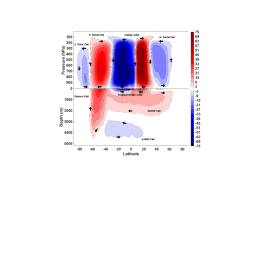
- Analys av oceancirkulationen. Genom att projicera den på olika koordinater kan man se om den är mekaniskt eller termiskt driven, och studera vattenmasstransformationen.
- Betydelsen av havsvattnets ickelinjära tillståndsekvation för oceancirkulationen.
- Havets kolsystem, och dess betydelse för atmosfärens låga CO2-koncentration under istiden.
- Koldioxidens direkta betydelse för växtligheten.
- Klimatekonomi.
Forskningsprojekt
Publikationer
I urval från Stockholms universitets publikationsdatabas
-
Thermodynamic Cycles in the Stratosphere
2020. Paolo Ruggieri, Maarten H. P. Ambaum, Jonas Nycander. Journal of the Atmospheric Sciences 77 (6), 1897-1912
ArtikelLäs mer om Thermodynamic Cycles in the StratosphereLarge-scale overturning mass transport in the stratosphere is commonly explained through the action of potential vorticity (PV) rearrangement in the flank of the stratospheric jet. Large-scale Rossby waves, with their wave activity source primarily in the troposphere, stir and mix PV and an overturning circulation arises to compensate for the zonal torque imposed by the breaking waves. In this view, any radiative heating is relaxational and the circulation is mechanically driven. Here we present a fully thermodynamic analysis of these phenomena, based on ERA-Interim data. Streamfunctions in a thermodynamic, log(pressure)–temperature space are computed. The sign of a circulation cell in these coordinates directly shows whether it is mechanically driven, converting kinetic energy to potential and thermal energy, or thermally driven, with the opposite conversion. The circulation in the lower stratosphere is found to be thermodynamically indirect (i.e., mechanically driven). In the middle and upper stratosphere thermodynamically indirect and direct circulations coexist, with a prominent semiannual cycle. A part of the overturning in this region is thermally driven, while a more variable indirect circulation is mechanically driven by waves. The wave driving does not modulate the strength of the thermally direct part of the circulation. This suggests that the basic overturning circulation in the stratosphere is largely thermally driven, while tropospheric waves add a distinct indirect component to the overturning. This indirect overturning is associated with poleward transport of anomalously warm air parcels.
-
Variable C∕P composition of organic production and its effect on ocean carbon storage in glacial-like model simulations
2020. Malin Ödalen (et al.). Biogeosciences 17 (8), 2219-2244
ArtikelLäs mer om Variable C∕P composition of organic production and its effect on ocean carbon storage in glacial-like model simulationsDuring the four most recent glacial maxima, atmospheric CO2 has been lowered by about 90–100 ppm with respect to interglacial concentrations. It is likely that most of the atmospheric CO2 deficit was stored in the ocean. Changes in the biological pump, which are related to the efficiency of the biological carbon uptake in the surface ocean and/or of the export of organic carbon to the deep ocean, have been proposed as a key mechanism for the increased glacial oceanic CO2 storage. The biological pump is strongly constrained by the amount of available surface nutrients. In models, it is generally assumed that the ratio between elemental nutrients, such as phosphorus, and carbon (C∕P ratio) in organic material is fixed according to the classical Redfield ratio. The constant Redfield ratio appears to approximately hold when averaged over basin scales, but observations document highly variable C∕P ratios on regional scales and between species. If the C∕P ratio increases when phosphate availability is scarce, as observations suggest, this has the potential to further increase glacial oceanic CO2 storage in response to changes in surface nutrient distributions. In the present study, we perform a sensitivity study to test how a phosphate-concentration-dependent C∕P ratio influences the oceanic CO2 storage in an Earth system model of intermediate complexity (cGENIE). We carry out simulations of glacial-like changes in albedo, radiative forcing, wind-forced circulation, remineralization depth of organic matter, and mineral dust deposition. Specifically, we compare model versions with the classical constant Redfield ratio and an observationally motivated variable C∕P ratio, in which the carbon uptake increases with decreasing phosphate concentration. While a flexible C∕P ratio does not impact the model's ability to simulate benthic δ13C patterns seen in observational data, our results indicate that, in production of organic matter, flexible C∕P can further increase the oceanic storage of CO2 in glacial model simulations. Past and future changes in the C∕P ratio thus have implications for correctly projecting changes in oceanic carbon storage in glacial-to-interglacial transitions as well as in the present context of increasing atmospheric CO2 concentrations.
-
Toward global maps of internal tide energy sinks
2019. C. de Lavergne (et al.). Ocean Modelling 137, 52-75
ArtikelLäs mer om Toward global maps of internal tide energy sinksInternal tides power much of the observed small-scale turbulence in the ocean interior. To represent mixing induced by this turbulence in ocean climate models, the cascade of internal tide energy to dissipation scales must be understood and mapped. Here, we present a framework for estimating the geography of internal tide energy sinks. The mapping relies on the following ingredients: (i) a global observational climatology of stratification; (ii) maps of the generation of M-2, S-2 and K-1 internal tides decomposed into vertical normal modes; (iii) simplified representations of the dissipation of low-mode internal tides due to wave-wave interactions, scattering by small-scale topography, interaction with critical slopes and shoaling; (iv) Lagrangian tracking of low-mode energy beams through observed stratification, including refraction and reflection. We thus obtain a global map of the column-integrated energy dissipation for each of the four considered dissipative processes, each of the three tidal constituents and each of the first five modes. Modes >= 6 are inferred to dissipate within the local water column at the employed half-degree horizontal resolution. Combining all processes, modes and constituents, we construct a map of the total internal tide energy dissipation, which compares well with observational inferences of internal wave energy dissipation. This result suggests that tides largely shape observed spatial contrasts of dissipation, and that the framework has potential in improving understanding and modelling of ocean mixing. However, sensitivity to poorly constrained parameters and simplifying assumptions entering the parameterized energy sinks calls for additional investigation. The attenuation of low-mode internal tides by wave-wave interactions needs particular attention.
-
The nonlinear equation of state of sea water and the global water mass distribution
2015. Jonas Nycander, Magnus Hieronymus, Fabien Roquet. Geophysical Research Letters 42 (18), 7714-7721
ArtikelLäs mer om The nonlinear equation of state of sea water and the global water mass distributionThe role of nonlinearities of the equation of state (EOS) of seawater for the distribution of water masses in the global ocean is examined through simulations with an ocean general circulation model with various manipulated versions of the EOS. A simulation with a strongly simplified EOS, which contains only two nonlinear terms, still produces a realistic water mass distribution, demonstrating that these two nonlinearities are indeed the essential ones. Further simulations show that each of these two nonlinear terms affects a specific aspect of the water mass distribution: the cabbeling term is crucial for the formation of Antarctic Intermediate Water and the thermobaric term for the layering of North Atlantic Deep Water and Antarctic Bottom Water.
-
Climate policy
2015. John Hassler, Per Krusell, Jonas Nycander. Economic Policy 31 (87), 501-+
ArtikelLäs mer om Climate policyThis paper makes suggestions for climate policy and defends them based on recent research in economics and the natural sciences. In summary: (i) the optimal carbon tax is rather modest; (ii) the key climate threat is coal; (iii) a carbon tax is to be preferred over a quantity-based system; (iv) the optimal tax on carbon does not appreciably harm growth; (v) subsidies to green technology are beneficial for the climate only to the extent that they make green technology outcompete coal; and (vi) a carbon tax is politically feasible.
-
Combined effect of global warming and increased CO2-concentration on vegetation growth in water-limited conditions
2013. Jonas Claesson, Jonas Nycander. Ecological Modelling 256, 23-30
ArtikelLäs mer om Combined effect of global warming and increased CO2-concentration on vegetation growth in water-limited conditionsThe most severe impact of climate change on vegetation growth and agriculture is likely to occur under water-limited conditions. Under such conditions the plants optimize the inward flux of CO2 and the outward flux of water vapor (the transpiration) by regulating the size of the stomatal openings. Higher temperature increases water loss through transpiration, forcing the plants to diminish the stomatal openings, which decreases photosynthesis. This is counteracted by higher CO2 concentration, which allows plants to maintain the inward flux of CO2 through the smaller openings. These two counteracting effects, combined with the change in precipitation, determine the net change of biological productivity. Here, a vegetation sensitivity approximation (VSA) is introduced, in order to understand and estimate the combined effect of changed temperature, CO2 and precipitation to first order. The VSA is based on the physical laws of gas flux through the stomatal openings, and is only valid under water-limited conditions. It assumes that the temperature depends logarithmically on the CO2 concentration with a given climate sensitivity. Precipitation is included by assuming that it is proportional to the transpiration. This is reasonable underwater-limited conditions, when transpiration is often a large fraction of the precipitation. The VSA is compared to simulations with the dynamic vegetation model LPJ. The agreement is reasonable, and the deviations can be understood by comparison with Koppen's definition of arid climate: in an arid climate growth increases more according to LPJ than according to the VSA, and in non-arid conditions the reverse is true. Both the VSA and the LPJ simulations generally show increased growth with increasing CO2 levels and the resulting temperature increase, assuming precipitation to be unchanged. Thus, in this case the negative temperature effect is more than compensated by the positive effect of CO2.
Visa alla publikationer av Jonas Nycander vid Stockholms universitet